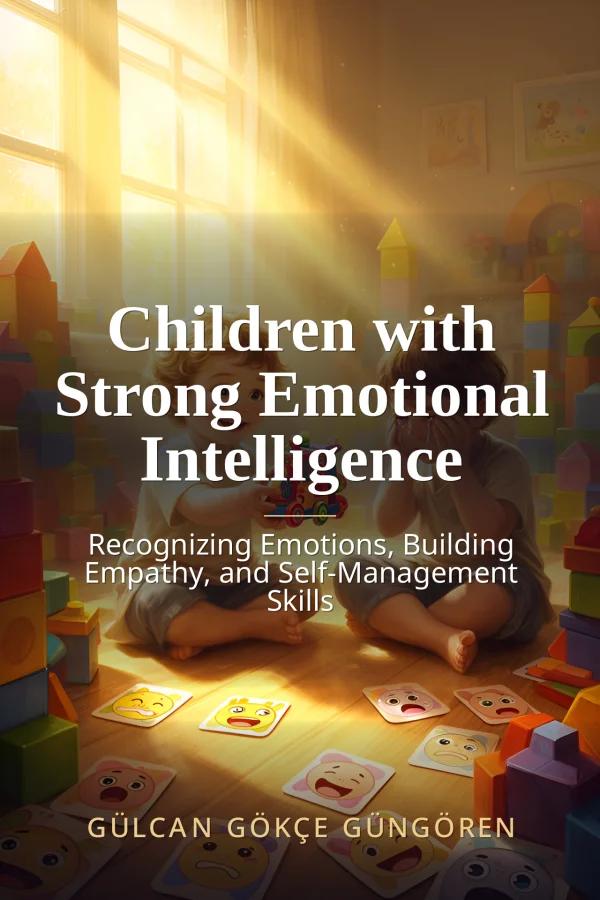
Children with Strong Emotional Intelligence: Recognizing Emotions, Building Empathy, and Self-Management Skills
Gülcan Gökçe Güngören
- Category Child Development
- Format PDF
- Size 3.8 MB
- Added 31.03.2025
- Views 443
This book offers parents and educators a practical framework for helping children understand and manage their emotional lives. Starting from the idea that emotional intelligence is a skill that can be taught rather than a fixed trait, the author walks readers through the core components: recognizing and naming emotions, reading the emotions of others, and developing the self-regulation needed to respond thoughtfully rather than react impulsively.
The chapters combine developmental explanations with concrete activities and everyday conversation examples that can be used at home or in the classroom. Readers will find guidance on talking with children about difficult feelings, responding to tantrums and conflict, modeling empathy, and building routines that support emotional balance. Each section connects theory to situations parents actually face, from sibling disagreements to school stress and friendship troubles.
The book is written for parents, caregivers, preschool and primary school teachers, and anyone who works with children and wants to support their social and emotional growth. It does not promise quick fixes; instead it treats emotional intelligence as a gradual process shaped by consistent adult attention and practice. Readers will come away with a clearer understanding of how children develop emotional skills and a set of usable tools for supporting that development day by day.
Read the Book
If the PDF does not appear, open it in a new tab.
Table of Contents
- Chapter 1 — A Future Beyond Academic Success 3p. 3
- CHAPTER 1p. 5
- CHAPTER 2p. 8
- CHAPTER 3p. 12
- CHAPTER 4p. 16
- CHAPTER 5p. 20
- CHAPTER 6p. 25
- CHAPTER 7p. 29
- CHAPTER 8p. 33
- CHAPTER 9p. 37
- CHAPTER 10p. 41
- CHAPTER 11p. 45
- CHAPTER 12p. 49
A Chapter from the Book: Chapter 1 — A Future Beyond Academic Success 3
CHAPTER 1 A Future Beyond Academic Success Have you ever caught yourself asking some version of this question: Is my child doing well enough? Maybe it comes while you are looking at a report card, or sitting in a parentteacher meeting, or scrolling past another family's holiday photos. The question rarely arrives alone. It usually brings friends — quiet worries that keep you company at night. Is my child keeping up? Are the grades good enough? Will this year's marks matter in ten years? That question takes many shapes in ordinary life. It is the sigh when a test comes back average. It is the extra worksheet printed on a Sunday evening. It is the way your shoulders drop when a teacher says your child is "doing fine" — and the way they tighten when the same teacher adds, "but he could focus more." It shows up at the dinner table, when you ask about school and get one-word answers. It shows up in the car, on the way to yet another class, when nobody is talking and the radio is doing all the work. Notice what all these moments have in common. In each one, a child's worth is being quietly measured by a single ruler. That ruler is useful — it tells you something real. But it is narrow. It cannot see the child who notices a friend is sad and sits beside them without being asked. It cannot see the child who gets angry, breathes, and chooses not to hit. It cannot see the child who tries again after failing at something in front of everyone. Those things do not appear on any report card, and yet they are shaped every single day. What Is Really Happening Underneath Here is the plain truth of it: grades measure one kind of performance, on one kind of task, at one moment in time. They are a snapshot, not a destiny. And because they are easy to see and easy to compare, they crowd out everything that is harder to measure. The mind grabs the number because the number is right there. The rest — the patience, the empathy, the ability to recover from disappointment — stays invisible, so it stays unwatered. Underneath the report card, something else is being built, day by day. Call it emotional intelligence, or simply the skill of living with feelings. It has a few working parts: knowing what you feel and being able to name it; noticing what someone else feels; managing your own reactions when they push you toward something you would regret; and handling conflict without breaking the relationship. None of these appear on a transcript. All of them show up in every friendship, every job, every marriage, every hard week for the rest of your child's life.
Why does the number keep winning? Because worry is drawn to what it can see. A low mark gives you something to fix, and fixing feels like love. But a child who learns only that their value rises and falls with a score learns something unintended: that they are only as good as their last result. That lesson can sit quietly in a person for decades, long after the exams are forgotten. It repeats because we pass on what we were taught, and because a visible number is easier to hold than an invisible strength — easier to check, easier to brag about, easier to fear. The good news is not that grades don't matter — they do open doors, and it is fair to care about them. The good news is that they are not the only door. The child who can name a feeling, calm a storm, and repair a friendship is building something just as critical, and it can be supported in small, daily moments. That is what the rest of this book is about — one small, ordinary step at a time. One Small Step You Can Take Today Here is a step small enough to actually do, and specific enough that you will know whether you did it. Tonight, at some point when your child is relaxed — dinner, the car, the last few minutes before lights out — ask one question that has nothing to do with achievement: "What was the best part of your day, and the hardest part?" Then stop talking. Not a follow-up quiz, not a lesson, not a bridge to homework. Just listen, and when they finish, say something that shows you heard the feeling, not the fact. "That sounds like it was frustrating" is enough. You are not solving anything. You are building the habit of being a person your child can talk to about feelings. It sounds almost too simple to matter, which is exactly why it gets skipped. But consider what the question does over time. It tells your child that their inner life is interesting to you — that you want the weather report from inside, not just the score from outside. It also gives them practice at the core skill of emotional awareness: pausing to notice what they feel and finding a word for it. Children who get this practice at home get better at it everywhere else. The part that keeps it going is rhythm, not intensity. One question most days beats a deep conversation once a month. Pick a moment that already happens reliably — the walk to school, clearing the table, the drive home — and attach the question to it, so it does not depend on you remembering. Expect some flat answers at first.
This section is a preview taken from the book (about 929 words). To continue, read the book or download the PDF.
Book Details
- Book
- Children with Strong Emotional Intelligence: Recognizing Emotions, Building Empathy, and Self-Management Skills
- Author
- Gülcan Gökçe Güngören
- Category
- Child Development
- Language
- English
- Format
- PDF · 3.8 MB
- Pages
- 53
- Words
- about 20,702
- Chapters
- 13
- Published
- Gülcan Gökçe Güngören · 31.03.2025
- Access
- Free to read and download; for personal use only, all rights belong to the author.
Frequently Asked Questions
Is the PDF of Children with Strong Emotional Intelligence: Recognizing Emotions, Building Empathy, and Self-Management Skills free?
Yes. Children with Strong Emotional Intelligence: Recognizing Emotions, Building Empathy, and Self-Management Skills can be read and downloaded for free on this site; no sign-up or payment is required.
How many pages is Children with Strong Emotional Intelligence: Recognizing Emotions, Building Empathy, and Self-Management Skills?
Children with Strong Emotional Intelligence: Recognizing Emotions, Building Empathy, and Self-Management Skills has 53 pages and about 20,702 words.
Which devices can I read Children with Strong Emotional Intelligence: Recognizing Emotions, Building Empathy, and Self-Management Skills on?
It is a PDF; you can read it in your browser on a phone, tablet or computer, or download it and open it offline.
Who is the author of Children with Strong Emotional Intelligence: Recognizing Emotions, Building Empathy, and Self-Management Skills?
Children with Strong Emotional Intelligence: Recognizing Emotions, Building Empathy, and Self-Management Skills was written by Gülcan Gökçe Güngören; it is listed in the Child Development category.
Similar Books
 Anxiety and Fear in Children: Understanding Worries, Building Confidence, and Supporting Psychological Resilience
Gülcan Gökçe Güngören
 Minds Growing Through Play: The Power of Play on Intelligence, Creativity, and Social Development
Gülcan Gökçe Güngören
 Anger and Behavioral Problems in Children: A Guide to Understanding Challenging Behaviors from Tantrums to Defiance
Gülcan Gökçe Güngören
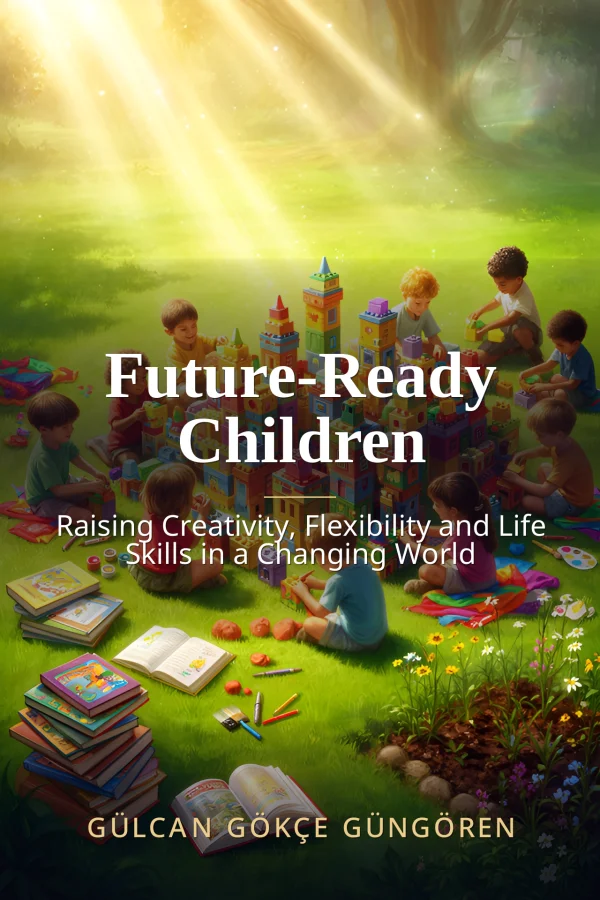 Future-Ready Children: Raising Creativity, Flexibility and Life Skills in a Changing World
Gülcan Gökçe Güngören
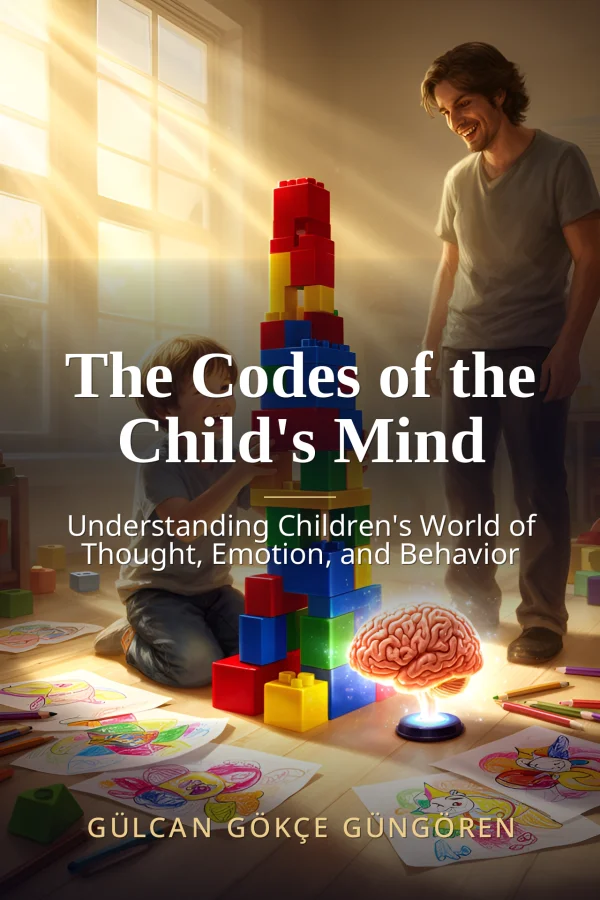 The Codes of the Child's Mind: Understanding Children's World of Thought, Emotion, and Behavior
Gülcan Gökçe Güngören
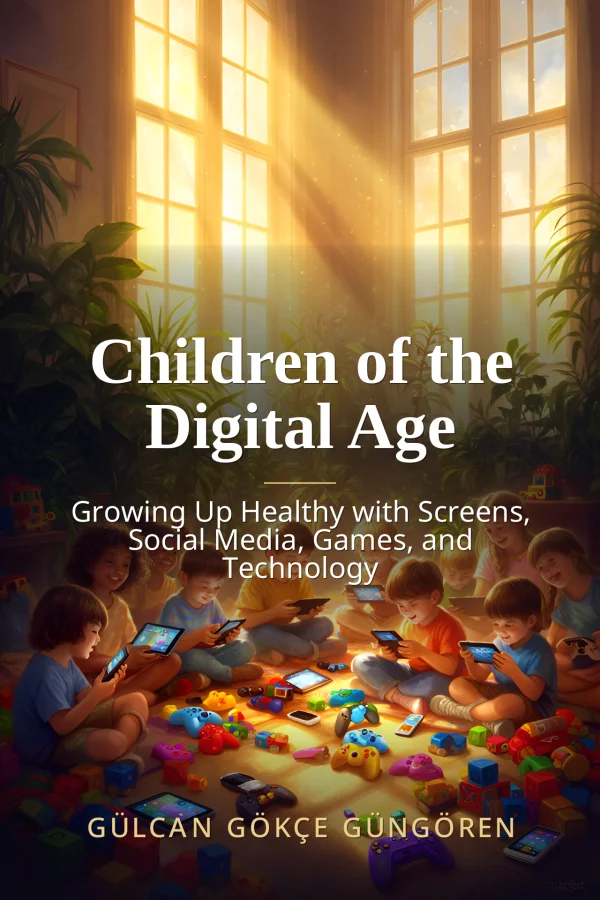 Children of the Digital Age: Growing Up Healthy with Screens, Social Media, Games, and Technology
Gülcan Gökçe Güngören